Eternal Hero: Action RPG
- 4.5
- Rating
- 1.00M
- Installs
- Free
- Price

 Analysis by App-foxy
I approached Eternal Hero: Action RPG expecting a quick adventure game built around fighting, but what stayed with me was the rhythm between short bursts of action and the decision to begin another run. It is an open-world hack-and-slash game from Rivvy Games, free to start, and its appeal comes less from a complicated story pitch than from the simple pleasure of moving through a dangerous world, attacking enemies, collecting progress, and testing whether the next attempt will go more smoothly.
That loop makes it easy to understand within minutes. You enter the world, look for trouble, strike through opponents, and use the results of that encounter to prepare for what comes next. The game is listed for Everyone 10+, runs on Android 8.0 or later, and has built a sizable audience with over 500 thousand installs. Its average rating sits at 4.5 from around 16 thousand ratings, which matches my impression that the basic combat-and-progression formula is immediately approachable even when the longer-term experience demands patience.
How the action loop feels from the first encounter onward
I find the opening action easy to grasp, but the first few encounters are also where it helps to slow down and notice what is actually making a fight difficult. Rather than treating every setback as a sign to push harder, I use it to decide whether to change my approach or leave that challenge for later. That small distinction makes the next step clearer and leads naturally to a few sensible checks before settling into a longer session.
You May Also Like

 Blood Strike: 2.5 Anniversary
Blood Strike’s Loadouts Turn Every Drop Into a Tactical Gamble
A close look at Blood Strike’s custom loadouts: how fast access to signature weapons reshapes its battle royale rhythm, rewards preparation, and narrows the gap between fights.

 Pandora - Music & Podcasts
Pandora’s Music Is Easy to Start, but Harder to Recover
Pandora’s strength is its low-effort path from a seed to a station. Its weak spot is how much confidence it asks you to place in connection, setup, and quiet recovery.

 8 Ball Pool
 Is Built on Rivalries, Rematches, and Routine
A close look at the rivalries, rematches, shared routines, and unanswered safety questions that turn a quick pool match into a persistent mobile community.

 Samsung Music
’s Quiet Strength Is Playing What You Already Own
Its reach comes less from spectacle than from dependable access to a personal library. That simplicity is both the app’s strongest retention engine and its ceiling.

 AccuWeather: Weather Radar
AccuWeather Review: A Quick, Clear Forecast for Everyday Decisions
For everyday plans, the best forecast is the one you can understand quickly. AccuWeather makes rain timing, radar, and local conditions easy to act on, with a few trade-offs.

 Hill Climb Racing
Why Hill Climb Racing Still Turns Crashes Into One More Run
A tiny car, a bumpy hill and one more upgrade: Hill Climb Racing keeps resurfacing because its simple chaos makes every near-miss feel personal.
More From Our News Desk
View All News


The first action is deliberately easy to understand
The strongest part of the opening experience is that I never felt I needed to study a long manual before playing. The central idea is clear: explore, find enemies, attack them, and keep moving. That directness matters in a mobile adventure game because the best first session is usually the one that gets me into the action before I start thinking about menus, currencies, or optimization.
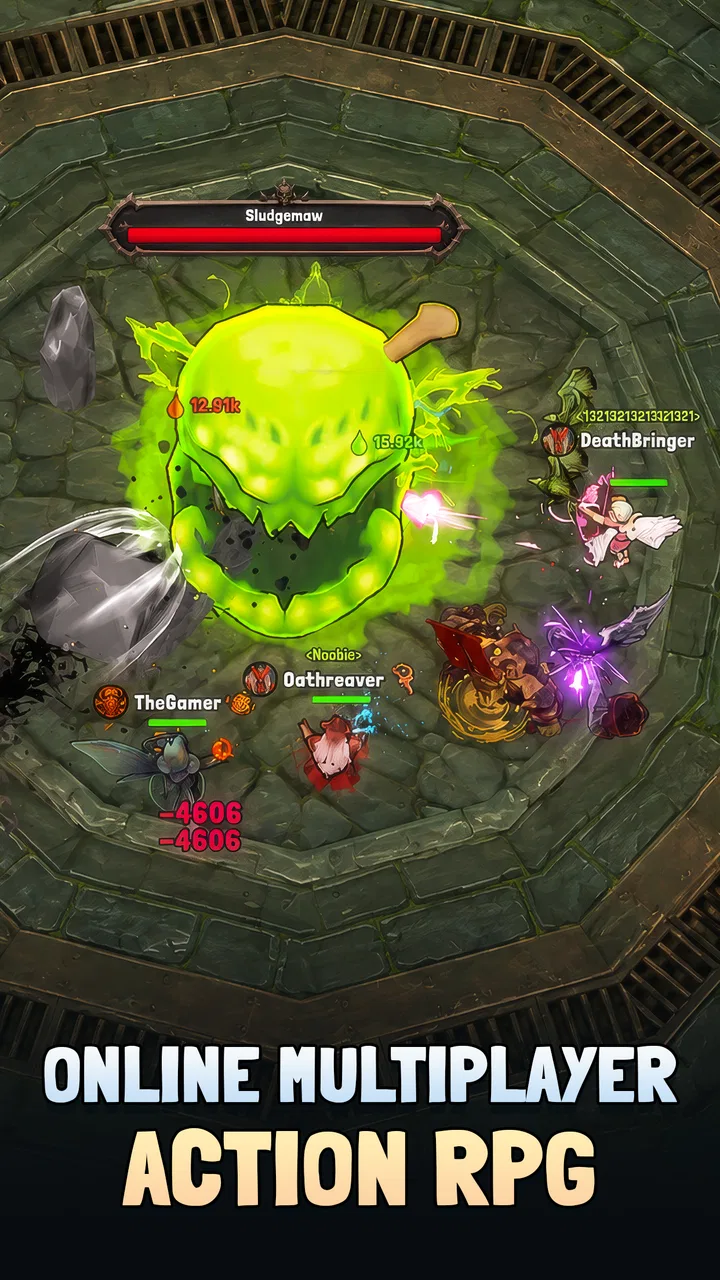
Combat has the familiar hack-and-slash appeal of making every encounter feel like a small interruption to exploration rather than a separate turn-based puzzle. I could approach a group, react to the danger in front of me, and decide whether to continue pushing forward or take the safer route. The satisfaction comes from seeing a difficult opponent become manageable after I adjust my timing and improve the character.
I would not describe the game as a slow, story-heavy role-playing experience. The open-world setting gives the fighting room to breathe, but the action remains the main reason to stay. Players who want a large amount of dialogue, elaborate relationship systems, or a carefully paced cinematic campaign may find the emphasis too narrow. Players who prefer getting to the next battle quickly will understand the design almost immediately.
One useful habit is to resist treating every visible enemy as an obligation. Early on, it is tempting to clear everything in sight, but that can turn exploration into repetitive work if the encounter is not helping my immediate goal. I found the game more enjoyable when I treated the world as a set of opportunities: fight when the reward or challenge feels worthwhile, move on when the battle is only slowing the session down, and return with a stronger character when an area feels uncomfortable.
Why the feedback rhythm keeps me moving
The game’s feedback rhythm is built from small confirmations. An attack connects, an enemy falls, progress accumulates, and the character feels a little more prepared for the next threat. None of those moments needs to be spectacular by itself. Together, they create the familiar mobile RPG pull of “one more encounter,” especially when I am close to improving my position or proving that an earlier obstacle is no longer a problem.
This is where the open-world format helps. Instead of forcing every session into one fixed sequence, the game lets the player’s attention shift between movement and combat. I can begin with the intention of completing a small objective, get distracted by enemies along the way, and end up playing longer because the combat remains active enough to make detours feel productive.
The trade-off is that repetition becomes noticeable if I play for too long without changing my goal. The core attack routine is satisfying in short and medium sessions, but it is not designed to hide the fact that fighting is the main activity. When the excitement drops, I usually get more from closing the game and returning later than from forcing another extended stretch immediately.
That makes Eternal Hero a good fit for players who enjoy compact sessions with a clear action focus. It is less suitable for someone looking for a constantly changing combat system where every few minutes introduces a completely new rule. The game’s strength is consistency, not endless reinvention.
Rewards work best when they solve a real problem
The reward stage is most satisfying when it changes what I can do in the next encounter. A reward feels meaningful when it helps me survive longer, defeat an enemy that previously stopped me, or move through the world with less hesitation. If I only collect progress without noticing a practical difference, the loop becomes routine rather than motivating.
I recommend checking improvements with a specific question in mind: what stopped me during the last attempt? If the problem was weak damage, improving offensive strength makes sense. If I was losing control in crowded fights, a more defensive approach may be more valuable. This simple habit prevents the common mistake of spending every reward automatically instead of connecting upgrades to actual play.
The game is free, which makes trying the basic experience easy, but it also includes optional in-app purchases ranging from $0.99 to $599.99 per item. That broad range is important context for anyone who dislikes aggressive monetization or wants a completely predictable free experience. I would approach purchases cautiously, especially before I know whether a particular improvement genuinely changes the way I play or merely shortens a period of waiting and repetition.
My advice is to play several sessions before spending anything. The early appeal comes from learning the combat loop and discovering how much progress I can make through ordinary play. If the game already feels enjoyable without a purchase, an optional transaction can remain a personal convenience. If the loop feels repetitive from the beginning, spending money is unlikely to fix the underlying issue.
The reset is what makes another session tempting
Every session eventually reaches a natural reset. I stop after a difficult encounter, after making enough progress for the moment, or simply when the next step starts to feel like work. The important part is that ending does not feel like abandoning the game. I can return later with a clearer goal: revisit a troublesome area, test a stronger build, or continue exploring with less pressure.
This reset-and-return structure suits mobile play particularly well. A short break can make a familiar fight feel fresh because I come back with a different plan instead of repeating the same actions mechanically. I found it useful to end a session after identifying one concrete next task rather than playing until I was completely tired of the game. That leaves a reason to return without turning the game into a daily obligation.
A realistic example is a weekday evening when I have only a little free time. I can open the game intending to play briefly, clear a few nearby encounters, notice that one enemy is still too strong, and stop before frustration builds. The next time I return, the purpose is clear: strengthen the character and see whether that earlier fight is now manageable. That small unresolved challenge is more effective than a vague promise to “make progress.”
On the other hand, players who want a single continuous adventure with a strong sense of final completion may find this structure less compelling. The game is better at creating repeatable momentum than at delivering the feeling of a carefully authored journey that steadily moves toward one dramatic conclusion.
Who will enjoy the open-world hack-and-slash approach
I would recommend Eternal Hero to someone who likes action RPGs that can be understood quickly but still offer reasons to improve. It works especially well for players who enjoy exploring at their own pace, fighting groups of enemies, and using rewards to make the next attempt easier. The free entry point also makes it simple to test whether the combat rhythm suits you before making any commitment.
It is a sensible choice for an Android player who wants adventure rather than a pure puzzle game or a passive idle experience. The age rating of Everyone 10+ also makes its tone more approachable than games built around mature themes, though parents should still remember that optional purchases are part of the experience.
I would suggest skipping it if your priority is competitive multiplayer, a deep tactical combat simulator, or a heavily scripted narrative. I would also be cautious if you are easily frustrated by repeated encounters or if optional purchase ranges make you uncomfortable. The game’s central loop asks you to accept repetition as part of improvement, and that is enjoyable only when the player sees value in gradually overcoming the same kind of challenge.
How it compares with familiar alternatives
Compared with a traditional premium adventure game, Eternal Hero is easier to sample because it is free, but the presence of in-app purchases changes the sense of ownership. A paid game may offer a more controlled progression path, while this title is built around returning to the action and deciding how much time or money you want to put into advancement.
Compared with an idle RPG, it asks more from the player. I cannot simply rely on passive progress to provide the whole experience; movement, combat decisions, and attention remain important. That makes the victories feel more personal, but it also means the game is not ideal for someone who wants to check in briefly and let systems do most of the work.
Compared with a large console-style open-world game, the scope is easier to approach in small pieces. I do not need to reserve an entire evening to enjoy a few encounters. The compromise is that the world and combat loop do not provide the same variety or narrative weight that a much larger paid production might offer. Eternal Hero wins through accessibility and repeatability rather than sheer depth.
Practical advice before committing
The current version is 3.3.5, and the game requires Android 8.0 or newer. If you are installing it on an older device, checking the operating-system requirement first will save time. Once inside, I recommend learning the basic combat feel before judging the whole progression system. A first impression shaped by rushing into difficult encounters can make the game seem harsher than it is.
Keep your goals small. Instead of trying to clear every area, choose one target for the session: reach a new section, improve after a defeat, or test whether a recent reward changes combat. This approach makes the action-feedback-reward-reset cycle easier to see and reduces the sense that progress is just a long list of chores.
It is also worth deciding your purchase boundary before you begin. Since individual in-app purchases can range from $0.99 to $599.99, I would not browse the payment options casually when frustrated by a difficult encounter. Take a break first, then decide whether the game is already giving you enough enjoyment through normal play. That distinction protects the experience from becoming a reaction to impatience.
My verdict on the reason to return
After spending time with it, I see Eternal Hero: Action RPG as a focused adventure game whose appeal depends on the repeatable connection between action and improvement. The first attack gets me moving, the combat feedback keeps the next encounter close, the rewards give progress a purpose, and the session reset creates a clean reason to return later.
It is not the right game for every RPG player. Its combat-centered structure can feel repetitive, and the optional purchase range deserves careful attention. The open-world label should also be understood as freedom to explore and fight rather than a promise of unlimited variety. Those limitations are real, but they do not undermine the game when approached as a compact hack-and-slash experience.
For me, the best sessions are the ones with a clear personal challenge: survive a little longer, improve after a defeat, or turn a previously uncomfortable area into familiar ground. If that kind of gradual mastery sounds satisfying, Rivvy Games has made a free adventure worth trying. If you need a rich narrative, competitive depth, or a completely purchase-free progression model, another category of RPG will probably serve you better.
My final recommendation: try it for the combat loop, keep your sessions purposeful, and judge the rewards by how much they change your next fight. That is where the game feels most honest and most enjoyable.
FAQs for Eternal Hero: Action RPG
01What is Eternal Hero: Action RPG about?
Eternal Hero: Action RPG is an immersive role-playing game where players embark on epic quests in a fantasy world. The game emphasizes character development, strategic combat, and exploration. Players can customize their heroes, engage in battles with various mythical creatures, and discover hidden treasures throughout expansive landscapes.
02Is Eternal Hero: Action RPG free to play?
Eternal Hero: Action RPG is free to download and play, but it offers in-app purchases. These purchases can enhance gameplay by providing special items, cosmetics, or boosts. While the game can be enjoyed without spending money, some players might choose to make purchases for a more personalized or expedited experience.
03What are the minimum device requirements to play Eternal Hero: Action RPG?
To play Eternal Hero: Action RPG, you'll need a device running Android 5.0 or iOS 10.0 or later. A stable internet connection is recommended for optimal performance. The game requires at least 500 MB of free storage space and functions best on devices with at least 2 GB of RAM for smooth gameplay.
04Does Eternal Hero: Action RPG support multiplayer features?
Yes, Eternal Hero: Action RPG includes multiplayer features such as co-op missions and player-versus-player (PvP) battles. You can team up with friends or other players worldwide to tackle challenging quests or compete in arenas to test your skills and strategies against others.
05How often does Eternal Hero: Action RPG receive updates?
Eternal Hero: Action RPG receives regular updates to enhance gameplay and introduce new content. These updates often include new quests, characters, events, and bug fixes. Developers actively listen to community feedback to ensure the game remains engaging and balanced for all players.
Pros
- Stunning graphics and immersive visuals.
- Engaging storyline with rich character development.
- Wide variety of weapons and skills.
- Regular updates with new content.
- Multiplayer mode enhances replayability.
Cons
- In-app purchases can be expensive.
- Requires a stable internet connection.
- Occasional lag during intense battles.
- High battery usage on extended play.
- Limited character customization options.

Eternal Hero: Action RPG
Gallery